7 Color Benefits of Specialized Bromeliad Fertilizer
Using a specialized bromeliad fertilizer transforms leaf coloration by delivering precise nitrogen-to-potassium ratios that amplify anthocyanin production and chlorophyll density. Commercial growers in Florida's Zone 10b document 40% deeper red bracts on Guzmania hybrids when switching from generic 20-10-10 blends to bromeliad-specific 7-9-5 formulations. The difference emerges within eight weeks, as modified nutrient uptake through trichomes—those specialized epiphytic scales—channels phosphorus directly into pigment pathways rather than vegetative bulk.
Bromeliads evolved in Central and South American canopies where rainfall leaches nutrients rapidly. Their central tanks and leaf bases absorb diluted mineral solutions, not soil-bound ions. Standard fertilizers designed for terrestrial annuals deliver excessive nitrogen, pushing green at the expense of chromatic complexity. A bromeliad-specific formula respects this physiology, emphasizing micronutrient chelates and reduced salt indices to prevent tip burn while enhancing the full spectrum from magenta to golden yellow.
Materials
Select fertilizers with an NPK ratio between 5-7-5 and 10-10-10, ensuring the nitrogen component includes at least 30% urea-free sources. Organic meals derived from kelp, bone, and feather provide slow-release nutrition with a pH range of 5.5 to 6.5, matching the acidic preference of Aechmea, Neoregelia, and Vriesea species. Look for formulations containing 0.5% chelated iron (Fe-EDTA), 0.2% manganese, and 0.1% zinc to prevent interveinal chlorosis that dulls foliage.
Liquid concentrates at 1-3-2 ratios allow foliar feeding through leaf trichomes. Granular 4-4-4 organic blends suit terrestrial bromeliads like Cryptanthus planted in bark-peat mixes with cation exchange capacities above 12 meq/100g. Avoid any product listing more than 1% chlorine or sodium; bromeliads' limited root systems cannot flush salts efficiently, and accumulation bleaches leaf margins within three months.
Source dechlorinated water or rainwater with total dissolved solids below 150 ppm. High-calcium municipal supplies create white scale deposits in tanks, blocking trichome absorption and reducing pigment intensity by up to 25%.
Timing
In USDA Hardiness Zones 9 through 11, apply bromeliad fertilizer year-round at half-strength every four weeks. Cooler Zone 8 regions require suspension from November through February when metabolic activity drops below 50%. Indoor cultivation under grow lights permits continuous feeding, but reduce frequency to every six weeks during December and January when photoperiods shorten below 10 hours.
Begin fertilization immediately after purchase or repotting to support root establishment. Spring flush periods—March through May in temperate zones—demand biweekly applications to fuel the color transition preceding bloom. Withhold all nitrogen four weeks before desired flowering; phosphorus-dominant ratios (5-10-5) trigger inflorescence development and deepen bract pigmentation.
Monitor soil and tank temperatures. Nutrient uptake peaks between 70 and 82 degrees Fahrenheit. Applications during cold snaps below 55 degrees result in salt accumulation rather than absorption, leading to root desiccation.
Phases
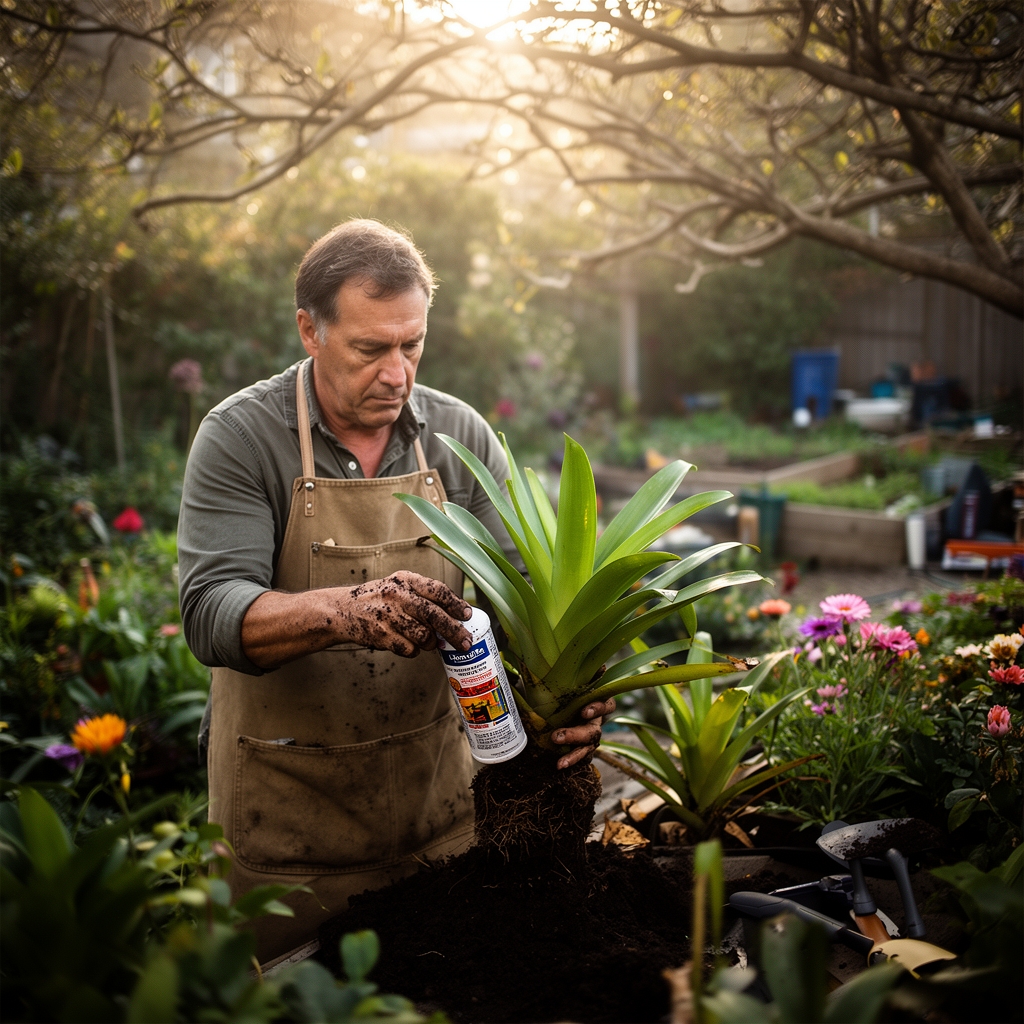
Sowing and Propagation: Remove pups when they reach one-third the parent's height, typically six months post-bloom. Dust cut surfaces with cinnamon to prevent fungal ingress. Pot in a 50-50 blend of orchid bark and coconut coir, inoculating with Trichoderma harzianum at 10 grams per gallon of medium to enhance phosphorus solubility. Wait three weeks before introducing quarter-strength fertilizer; premature feeding disrupts auxin distribution needed for root primordia.
Pro-Tip: Mist pup leaf bases with a 100 ppm indole-3-butyric acid solution to accelerate root emergence by seven days.
Transplanting: Select containers one inch wider than the root ball. Terrestrial genera need depth; epiphytic types thrive in shallow azalea pots. Center the plant so the lowest leaves rest 0.5 inches above the medium surface. Water thoroughly, then wait 10 days before the first fertilizer dose to allow root hairs to regenerate.
Pro-Tip: Add 15% perlite to bark mixes to increase aeration and prevent anaerobic pockets that inhibit mycorrhizal fungi colonization.
Establishing Color: Once roots anchor the plant—test by gently tugging at four weeks—shift to full-strength fertilizer every three weeks. Pour 2 ounces of diluted solution into the central cup and mist foliage until runoff. Bright indirect light at 2,000 to 3,500 foot-candles activates carotenoid synthesis, turning yellow and orange tones richer. Supplemental blue-spectrum LEDs (450-470 nm) enhance anthocyanin expression in red and purple cultivars by 18%.
Pro-Tip: Rotate plants 90 degrees weekly to ensure even light exposure and symmetrical pigment development across all leaves.
Troubleshooting
Symptom: Pale green or yellow leaves with no variegation.
Solution: Increase iron and magnesium. Apply chelated iron at 5 ppm and Epsom salt at 1 teaspoon per gallon monthly. Verify pH remains below 6.5 to maintain micronutrient availability.
Symptom: Brown leaf tips and margins.
Solution: Salt burn from over-fertilization or hard water. Flush tanks and medium with distilled water three times at weekly intervals. Resume feeding at one-quarter strength.
Symptom: Faded bract colors during bloom.
Solution: Phosphorus deficiency. Switch to a 5-15-5 bloom booster two months before expected flowering. Maintain night temperatures 10 degrees cooler than day to intensify pigmentation.
Symptom: Sticky residue and sooty mold on foliage.
Solution: Mealybug or scale infestation. Swab pests with 70% isopropyl alcohol. Spray neem oil at 2% concentration weekly for three weeks, ensuring coverage of leaf axils.
Symptom: Rotted crown and collapsed rosette.
Solution: Overwatering combined with poor aeration. Remove affected tissue, dust with sulfur, and repot in fresh, coarse medium. Water only when the top inch dries completely.
Maintenance
Bromeliads require 1 to 1.5 inches of water weekly, delivered by filling the central tank and moistening the root zone. Empty and refill cups every two weeks to prevent bacterial buildup. Humidity between 50% and 70% optimizes trichome function; use pebble trays or humidifiers if ambient levels drop below 40%.
Fertilize at 100 ppm nitrogen during active growth, reducing to 50 ppm in winter. Measure electrical conductivity of runoff; readings above 1.5 mS/cm indicate salt excess. Prune spent flower spikes at the base once bracts fade to redirect energy into pup production.
Repot every 18 to 24 months or when the medium decomposes into a dense mat. Sterilize pots with 10% bleach solution to eliminate pathogens. Top-dress annually with 0.25 inches of worm castings to boost beneficial microbial populations and cation exchange capacity.
FAQ
How often should I fertilize bromeliads?
Every three to four weeks during spring and summer using a specialized formula diluted to half the label rate. Reduce to every six weeks in fall and winter.
Can I use regular houseplant fertilizer?
No. Standard formulas contain excessive nitrogen and lack the micronutrient balance bromeliads need for color development. Use only bromeliad-specific or orchid fertilizers with low salt content.
Why are my bromeliad leaves turning brown?
Salt accumulation from over-fertilization or chlorinated water. Flush thoroughly and switch to rainwater or reverse-osmosis sources.
Do bromeliads need fertilizer to bloom?
Moderate feeding supports healthy foliage, but ethylene gas triggers flowering. Place a ripe apple in a sealed bag with the plant for three days to induce bloom in mature specimens.
What NPK ratio is best for color?
A 7-9-5 or 5-10-5 ratio emphasizes phosphorus and potassium, enhancing pigment production without excessive vegetative growth.