9 Accuracy Benefits of Using an Indoor Moisture Probe
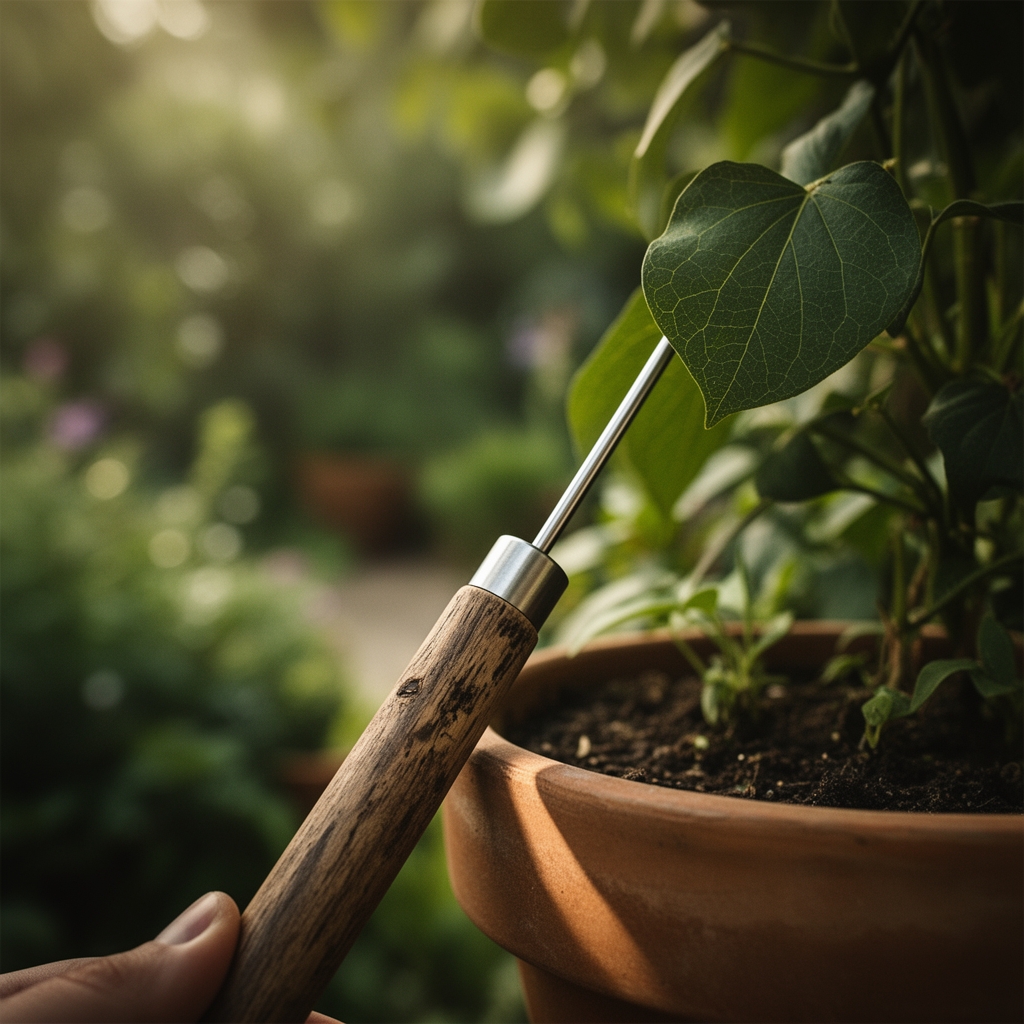
Roots buried deep in ceramic or resin containers face a hidden threat: waterlogged lower layers separated from dry surface soil by vertical gradients that defy fingertip testing. Using a moisture probe for deep indoor pots eliminates guesswork by measuring saturation at multiple depths, transforming intuitive watering into precision irrigation that prevents root rot, nutrient lockout, and fungal colonization in the anaerobic zones where problems begin.
Materials
A functional moisture probe for indoor containers requires a penetration depth of at least 8 inches to reach the critical zone where drainage meets compaction. Analog models use gypsum sensors with electrical resistance measurement, while digital probes employ capacitance technology that reads volumetric water content without soil contact corrosion. Pair the probe with well-draining substrate amendments: perlite at 20% volume, composted pine bark fines (pH 5.5–6.2), and worm castings delivering 1-0-0 slow-release nitrogen. For deep pots exceeding 14 inches, incorporate biochar at 10% volume to improve cation exchange capacity and buffer moisture fluctuations. Balanced organic fertilizers in the 4-4-4 or 5-5-5 NPK range support steady growth without salt accumulation that skews probe readings. Calibration solution (specific to your probe model) maintains sensor accuracy across pH ranges from 5.0 to 7.5.
Timing
Indoor moisture probe use transcends seasonal constraints, but initial deployment should align with container establishment phases. For tropical specimens like Ficus or Monstera, begin monitoring when roots reach 6 inches deep, typically 4–6 weeks post-transplant. Temperate species moved indoors before first frost (USDA Zones 7–10: late October; Zones 3–6: mid-September) require immediate probe placement to track the transition from outdoor precipitation to controlled indoor irrigation. Dormant deciduous plants in unheated spaces (35–45°F) need monthly deep-zone readings to prevent desiccation. Spring growth flushes triggered by increasing daylight (12+ hour photoperiods) demand daily probe checks as auxin distribution accelerates water uptake. Establish baseline readings for each container during the first two weeks of monitoring, recording depth-specific moisture at 3-inch, 6-inch, and maximum depth intervals.
Phases
Sowing and Early Establishment
Direct sowing in deep containers creates vertical moisture stratification within 72 hours. Insert the probe to seed depth (typically 0.5–1 inch for herbs, 2 inches for vegetables) immediately after watering. Target readings: 7–8 on a 1–10 analog scale, or 60–70% volumetric water content on digital models. Surface evaporation misleads hand-check methods, while probe data reveals sustained moisture at the germination zone. Monitor twice daily until emergence, then shift to root-depth tracking.
Pro-Tip: Inoculate seed-starting mix with Trichoderma harzianum at 1 gram per gallon of substrate. This fungal colonization suppresses damping-off pathogens in the moist conditions optimal for germination.

Transplanting and Root Development
Transplant shock stems from inconsistent moisture delivery to the rootball versus surrounding substrate. Probe both zones separately during the first three weeks. The original rootball should read 6–7 (50–60% VWC), while outer soil remains at 5–6 (40–50% VWC) to encourage outward root exploration. Roots follow moisture gradients; excessively wet perimeter zones cause circling instead of radial expansion. Check moisture 2 inches beyond the rootball edge every three days, adjusting irrigation volume to maintain the gradient until roots penetrate 80% of container volume.
Pro-Tip: Mycorrhizal fungi (Glomus species) applied at transplant colonize roots within 14 days, extending effective root surface area by 100–1000x and improving moisture extraction from drier substrate zones that probes identify.
Mature Plant Maintenance
Established root systems exploit the full container volume, but large pots develop perched water tables in the bottom 2–4 inches. Weekly probe readings at maximum depth identify saturation before root suffocation occurs. Mature specimens in 18-inch pots require 0.5–0.75 gallons per watering event when probe readings drop to 4 (30% VWC) at mid-depth. Top-heavy plants like dracaena or fiddle-leaf fig show wilting at 40% VWC in upper zones while lower zones remain at 70% VWC, a discrepancy only deep probing reveals.
Pro-Tip: Prune feeder roots annually by inserting a soil knife at 45-degree angles around the container perimeter, 2 inches from the wall. This stimulates new root growth in refreshed substrate and eliminates deep roots prone to anaerobic stress.
Troubleshooting
Symptom: Yellowing lower leaves with probe reading 8+ at depth.
Solution: Root rot from Pythium or Phytophthora. Repot into fresh substrate with 30% perlite. Drench with hydrogen peroxide solution (1 part 3% peroxide to 4 parts water). Reduce watering frequency until probe reads 5 at depth.
Symptom: Wilting despite probe reading 7 at all depths.
Solution: Root-bound conditions restrict water uptake despite available moisture. Probe resistance increases in compacted root masses. Transplant to a container 2–4 inches larger in diameter.
Symptom: Probe readings inconsistent between insertions at same depth.
Solution: Layered substrate with hydrophobic pockets. Water penetrates unevenly. Apply wetting agent (saponin-based) at 1 tablespoon per gallon. Re-mix substrate if problem persists.
Symptom: Salt crust on soil surface, probe reads 9+ continuously.
Solution: Fertilizer salt accumulation reduces substrate porosity. Leach pots with water volume equal to 2x container volume. Probe should drop to 6 within 12 hours. Switch to half-strength fertilizer at 2-2-2 NPK.
Maintenance
Water when probe readings at mid-depth (half the container height) drop to 4–5 on analog scales or 35–45% VWC on digital models. Apply water slowly until probe readings increase to 7 (60% VWC) at the same depth, typically requiring 10–15 minutes for 14-inch pots to allow downward percolation. Check probes three days post-watering to verify drainage; readings above 8 indicate compaction requiring aeration with a chopstick inserted to 6-inch depth in five locations. Calibrate probes monthly using distilled water (should read 10 or 100% VWC) and air-dry conditions (should read 0–1 or 0–10% VWC). Replace analog probe sensors every 18 months as gypsum elements degrade. Clean digital probe tips with isopropyl alcohol after each use to prevent substrate buildup affecting capacitance readings.
Fertilize when probe readings stabilize in the 5–6 range, indicating active root water uptake. Apply liquid fertilizer at 5-5-5 NPK diluted to half-strength (0.25 tablespoon per gallon) every two weeks during growth phases. Probe immediately after fertilizing to confirm even distribution; readings should not exceed 8 to avoid salt stress.
FAQ
How deep should I insert the probe for accurate readings?
Insert to two-thirds of the total pot depth or 1 inch above the drainage layer. For a 12-inch pot, probe to 7–8 inches. Surface readings within the top 2 inches do not reflect root-zone conditions.
Can I leave the probe in the soil permanently?
Analog probes tolerate continuous insertion for 7–10 days before sensor degradation. Digital probes should be removed after each reading to prevent corrosion. Permanent installation requires commercial-grade sensors with sealed electronics.
Why does my probe read dry when the pot feels heavy?
Substrate weight reflects total water content, including bound water unavailable to roots. Probes measure plant-available water. Dense substrates like coir retain moisture in micropores too small for root hair penetration.
Do moisture probes work in all substrate types?
Probes require mineral or organic particles for electrical conductivity. They fail in pure hydroponic media, LECA, or chunky orchid bark exceeding 0.5-inch diameter. Amend coarse mixes with 30% peat or coco coir.
How do I know if my probe needs calibration?
Test in distilled water (should read 10 or maximum) and completely dry substrate (should read 0–1). Deviation exceeding 15% requires recalibration per manufacturer protocol or sensor replacement.