9 Harmonious Steps to Prepare an Indoor Arrangement
Learning how to prepare a multi-plant indoor arrangement begins with understanding that soil chemistry and spatial hierarchy matter more than color coordination. A successful multi-species container demands precise matching of water requirements, root architecture, and light thresholds. The practitioner must account for allelopathic compounds, competing root exudates, and differential nutrient uptake rates across species sharing one finite volume of substrate.
Materials
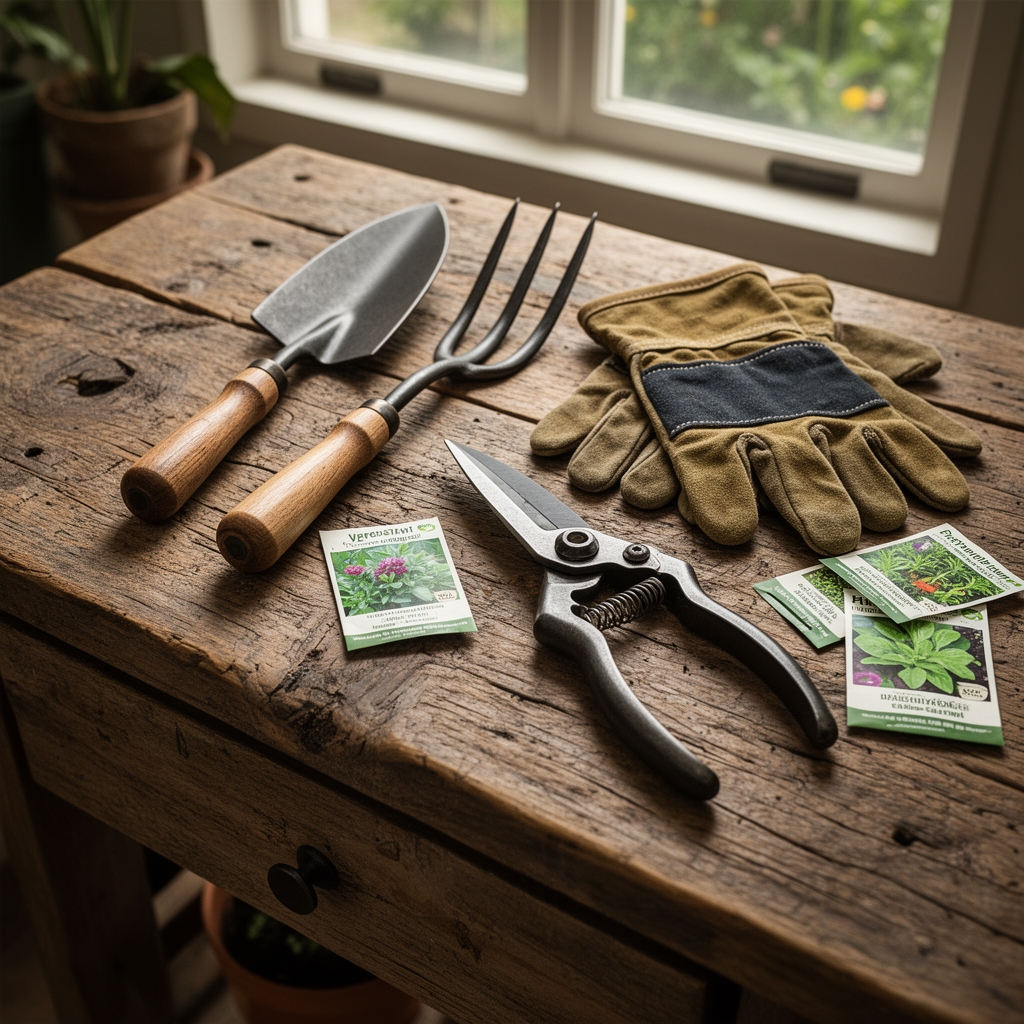
Container selection begins with drainage. The vessel requires a minimum of four quarter-inch drainage holes per square foot of base area. Glazed ceramic retains moisture 40% longer than terra cotta under identical conditions.
Substrate design determines longevity. Combine 40% peat or coir (pH 5.5-6.2), 30% perlite (particle size 3-6mm), 20% composted bark fines, and 10% worm castings. This blend achieves a cation exchange capacity of 18-25 meq/100g. Incorporate a balanced organic amendment at 4-4-4 NPK ratio, applied at 2 tablespoons per gallon of mix. For acid-loving specimens like ferns or calatheas, substitute 15% of the peat with sulfur-coated sphagnum to lower pH to 5.0-5.5.
Mycorrhizal inoculant (Glomus intraradices at 150 spores per gram) goes directly into root zones during transplant. Slow-release prills (14-14-14 NPK, 3-4 month formulation) provide baseline fertility at 1 teaspoon per 6-inch plant.
Select plants by water regime first. Group xerophytes (Sansevieria, Zamioculcas) separately from mesophytes (Spathiphyllum, Fittonia). Mixing these categories guarantees root rot in one cohort or desiccation in the other.
Timing
Indoor arrangements bypass outdoor hardiness zone constraints but remain subject to dormancy cycles. Initiate assembly in early spring (March through April in northern latitudes) when increasing photoperiod triggers active growth. Auxin distribution peaks during this window, accelerating root establishment by 30-45% compared to autumn planting.
Avoid assembly during winter solstice periods (November-January). Even tropical species experience reduced metabolic activity under 10-hour photoperiods. Transplant stress compounds when meristematic activity slows.
For species requiring vernalization (certain Cyclamen, Oxalis), provide 6-8 weeks at 40-50°F before incorporating into arrangements.
Phases
Sowing Phase
Direct seeding into final containers works only for fast-germinating annuals (Pilea, Coleus). Surface-sow species requiring light for germination. Cover others to 2x seed diameter. Maintain substrate at 72-78°F using bottom heat mats. Germination medium requires lower fertility: 1-1-1 NPK maximum to prevent damping-off.
Pro-Tip: Dust seeds with Trichoderma harzianum (1g per 1000 seeds) to suppress Pythium and Rhizoctonia during vulnerable cotyledon stage.
Transplanting Phase
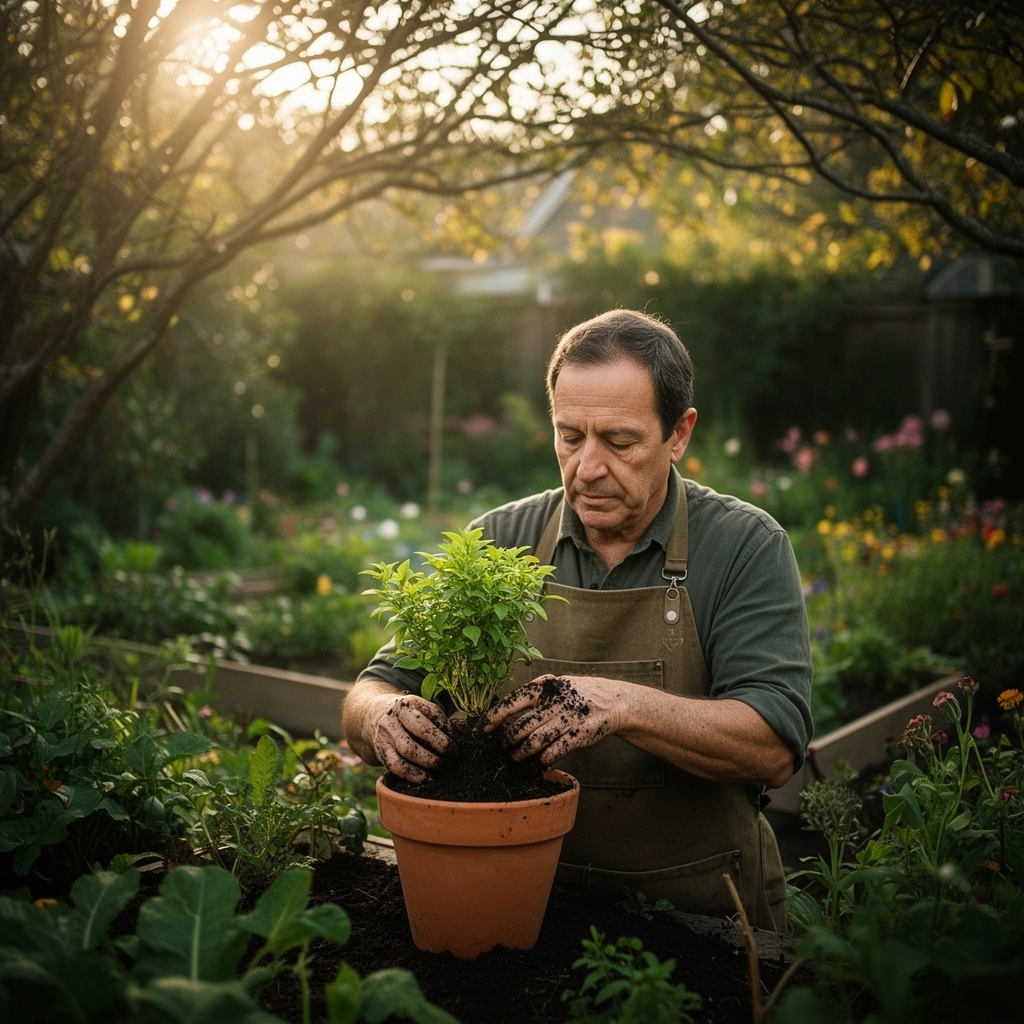
Root-bound specimens require intervention. Score the root ball vertically in four locations, cutting 1/4 inch deep. This severs circling roots and stimulates lateral branching. Soak root balls in dilute seaweed extract (1:100 ratio) for 15 minutes before planting to reduce transplant shock.
Position tallest specimens at the north side of containers to prevent shading. The "thriller, filler, spiller" framework remains valid: one vertical accent (Dracaena, snake plant), three mid-height specimens (Peperomia, small ferns), and two trailing species (Pothos, Philodendron scandens).
Maintain original soil line positions. Burying stems deeper invites crown rot, particularly in succulents and thick-stemmed tropicals.
Pro-Tip: Topdress with 1/4 inch of horticultural grit around crowns of rot-susceptible species to improve air circulation.
Establishing Phase
Roots colonize new substrate within 14-21 days under optimal conditions. Water only when the top 2 inches of substrate dry completely during this period. Overwatering during establishment causes more failures than any pathogen.
Place arrangements in bright indirect light (200-400 foot-candles). Acclimate gradually if moving to higher light zones, increasing exposure by 50 foot-candles per week.
Pro-Tip: Apply foliar kelp spray (1 tablespoon per gallon) weekly for three weeks post-transplant. Cytokinins in kelp extract accelerate leaf expansion and chlorophyll synthesis.
Troubleshooting
Symptom: Chlorosis in new growth while older leaves remain green.
Solution: Iron deficiency induced by high substrate pH. Drench with chelated iron (Fe-DTPA at 1 teaspoon per gallon) and incorporate elemental sulfur at 1/2 teaspoon per 6-inch pot to lower pH long-term.
Symptom: Brown leaf margins, crispy texture, starting at tips.
Solution: Soluble salt accumulation from over-fertilization or poor drainage. Leach pots with 2x container volume of distilled water. Reduce fertilizer concentration by 50%.
Symptom: Webbing on leaf undersides, stippled yellow leaves.
Solution: Spider mite infestation (Tetranychus urticae). Spray with horticultural oil at 2% concentration, ensuring complete coverage of undersides. Repeat every 5 days for three applications. Increase ambient humidity above 50% to suppress reproduction.
Symptom: Sudden leaf drop without yellowing.
Solution: Ethylene exposure from nearby ripening fruit or gas leaks. Remove ethylene sources and improve ventilation to 4-6 air exchanges per hour.
Maintenance
Water when the top 2 inches of substrate feel dry to touch. This typically translates to 1/4 cup per 4-inch plant, 1/2 cup per 6-inch plant, scaled proportionally. Water until 10% drains from bottom holes, then discard runoff within 30 minutes.
Fertilize every 14 days during active growth (March-September) using liquid kelp and fish emulsion at 1 tablespoon per gallon, alternating with balanced synthetic (10-10-10) at half-strength. Suspend fertilization October through February.
Rotate containers 90 degrees weekly to ensure even light distribution and prevent phototropic bending.
Remove spent foliage within 24 hours of senescence. Dead tissue harbors Botrytis and fungus gnats.
FAQ
How long before plants establish?
Roots colonize new substrate in 14-21 days. Full visual establishment requires 6-8 weeks when top growth matches pre-transplant vigor.
Can I mix cacti with ferns?
No. Cacti require substrate drying completely between waterings (every 10-14 days). Ferns demand consistent moisture (every 3-4 days). These requirements cannot coexist.
What causes white crust on soil surface?
Mineral salt accumulation from hard water or excess fertilizer. Scrape away top 1/2 inch of substrate and replace with fresh mix. Switch to filtered water below 150 ppm dissolved solids.
How do I prevent leggy growth?
Insufficient light causes internodal elongation. Increase intensity to 400-800 foot-candles or supplement with T5 fluorescent tubes positioned 6 inches above foliage for 14 hours daily.
When should I repot the arrangement?
Repot when roots emerge from drainage holes or growth rate declines despite proper care. Most arrangements require division or repotting every 18-24 months.