9 Tips to Use a Landscape Rake for Large-Scale Prep
Using a rake for landscaping at scale transforms raw, compacted earth into a workable seedbed. The steel tines carve through clay, break clods into pea-sized aggregates, and expose subsoil crusts that resist water infiltration. On a ten-acre plot, a three-point landscape rake pulled by a 45-horsepower tractor can level a freshly tilled field in six hours, distributing organic matter and adjusting microtopography to eliminate standing water. The weight of the implement compresses air pockets while the tines aerate the top four inches, creating ideal conditions for root penetration and mycorrhizal colonization.
Materials
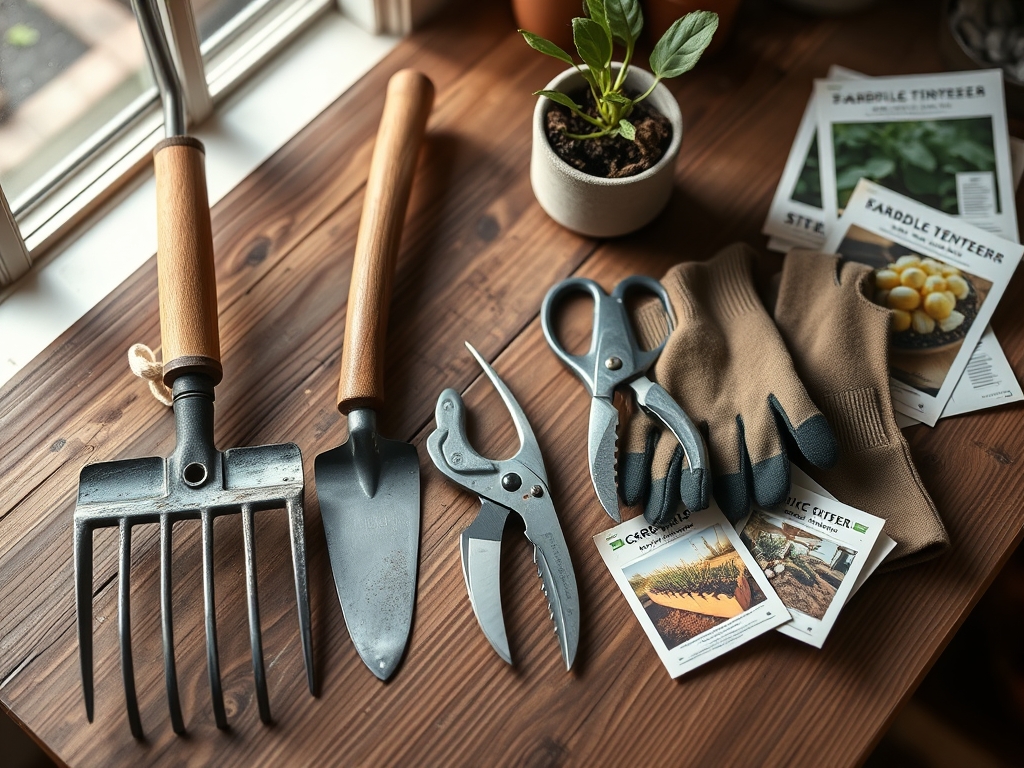
A landscape rake with 1.5-inch spacing between tines handles most mineral soils. For heavy clay (pH 6.8–7.2), incorporate 2 cubic yards of composted pine bark per 1,000 square feet to improve cation exchange capacity. Apply a 4-4-4 organic meal at 50 pounds per 1,000 square feet two weeks before raking to ensure nitrogen availability during microbial decomposition. Sandy loam (pH 5.5–6.5) requires sulfur at 5 pounds per 1,000 square feet if the target crop demands acidity below 6.0.
Gypsum at 40 pounds per 1,000 square feet reduces sodium on saline-alkali soils without altering pH. Pelleted lime raises pH by 0.5 units when applied at 50 pounds per 1,000 square feet and raked into the top three inches. A soil test revealing less than 3 percent organic matter warrants green manure cover crops such as crimson clover or hairy vetch, which fix 100–150 pounds of nitrogen per acre before termination.
Timing
In USDA Hardiness Zones 6–7, schedule large-scale raking between March 15 and April 10, when soil temperature at four-inch depth reaches 50°F and moisture content allows a handful of earth to crumble rather than ribbon. Zone 8 operators begin February 20, while Zone 5 practitioners wait until April 25 to avoid smearing wet soil into impermeable pans.
For fall establishment, rake between August 25 and September 15 in Zones 6–7. This window provides eight weeks of root growth before the first hard freeze (28°F for four consecutive hours). Zones 9–10 extend the season through October 30. Avoid raking within 48 hours of rainfall exceeding 0.75 inches, as saturated soil compacts under implement weight and destroys aggregate structure.
Phases

Sowing Phase: After initial tilling, make two perpendicular passes with the landscape rake at 3.5 miles per hour. The first pass breaks clods and levels high spots. The second pass, oriented 90 degrees to the first, fills depressions and creates a uniform grade with no more than 2 percent slope. Broadcast seed immediately after the final pass to ensure soil-to-seed contact. Roll the site with a cultipacker at 2 miles per hour to press seed into the top quarter-inch.
Pro-Tip: Mix seed with granular inoculant containing Rhizophagus irregularis at 10 ounces per acre. The mycorrhizal fungi colonize root hairs within 14 days, increasing phosphorus uptake by 40 percent in low-fertility soils.
Transplanting Phase: Rake planting rows to create raised beds six inches high and 36 inches wide. The elevated profile improves drainage and warms soil 3–5°F faster than flat ground. Space rows 48 inches on center to accommodate tractor cultivation between beds. Transplant plugs or bareroot stock when root-zone temperature stabilizes at 55°F.
Pro-Tip: Prune transplant roots at a 45-degree angle with sterilized shears. The cut stimulates auxin distribution and lateral root formation within seven days, reducing transplant shock by 30 percent.
Establishing Phase: Rake interrow spaces three weeks after transplanting to sever emerging weed seedlings at the soil line. Set tine depth to 0.5 inches to avoid damaging crop roots. Repeat cultivation every ten days until canopy closure. Incorporate a 5-10-10 granular fertilizer at 25 pounds per 1,000 square feet during the second cultivation pass.
Pro-Tip: Apply liquid kelp at 2 ounces per gallon as a foliar spray 48 hours after each cultivation. The cytokinins in kelp extract reduce ethylene stress responses and accelerate leaf expansion.
Troubleshooting
Symptom: Ruts deeper than three inches persist after raking.
Solution: Increase tractor ballast by 200 pounds per rear tire. Reduce forward speed to 2 miles per hour and overlap passes by 12 inches.
Symptom: Clods larger than two inches remain on the surface.
Solution: Disc the field a second time, then wait 72 hours for residual moisture to evaporate before raking. Clods fracture more readily at 18 percent moisture content than at 25 percent.
Symptom: Raked soil crusts within three days, preventing seedling emergence.
Solution: Incorporate 1 cubic yard of coarse sand per 1,000 square feet to disrupt plate formation. Apply 0.25 inches of water daily until cotyledons emerge.
Symptom: Cyperus esculentus (yellow nutsedge) regrows through raked beds.
Solution: Make four cultivation passes at seven-day intervals before planting to exhaust tuber reserves. Nutsedge depletes carbohydrate stores after repeated shoot removal.
Maintenance
Apply 1 inch of water per week during establishment, measured with rain gauges placed 20 feet apart. Irrigate early morning (5:00–8:00 AM) to reduce foliar disease pressure. Topdress with compost at 0.5 cubic yards per 1,000 square feet every six weeks. Re-rake interrow spaces monthly to maintain a dust mulch that conserves soil moisture and suppresses annual weeds.
Test soil pH and NPK levels every eight weeks. Adjust phosphorus with bone meal at 30 pounds per 1,000 square feet if foliar analysis shows less than 0.3 percent P. Potassium sulfate at 20 pounds per 1,000 square feet corrects deficiencies below 1.5 percent K.
FAQ
How deep should landscape rake tines penetrate?
Set tines to four inches for primary leveling, then raise to two inches for final passes. Deeper penetration risks bringing weed seeds and pathogens to the surface.
Can I rake frozen ground?
No. Frozen soil shatters into angular fragments that resist aggregation. Wait until thaw penetrates six inches.
What tractor horsepower is required for a six-foot rake?
Minimum 35 PTO horsepower for clay, 25 for loam. Underpowered tractors stall in compacted zones.
Should I rake before or after fertilizing?
Broadcast granular fertilizer, then rake to incorporate nutrients into the root zone. Surface applications volatilize or wash away.
How do I prevent windrows of debris?
Overlap passes by one-third rake width. Reduce speed to 2.5 miles per hour in areas with heavy residue.