10 Traditional Steps to Design a Formal Garden
Crushing a handful of damp, friable loam reveals the metallic scent of geosmin and the structural integrity of a healthy rhizosphere. True formal design requires more than aesthetics; it demands an understanding of plant physiology and spatial geometry. Mastering the steps to design a formal garden begins with the imposition of human order upon biological chaos. Success is measured by the turgor pressure of a boxwood hedge and the precise mathematical alignment of axial paths. This is a technical exercise in controlling light, soil chemistry, and growth rates to create a permanent living monument.
Materials:

The foundation of a formal garden is the substrate. You must target a pH range of 6.0 to 7.0 to ensure maximum nutrient availability. For the structural hedging and parterres typical of this style, the soil must be a friable loam with a high Cation Exchange Capacity (CEC) above 15 meq/100g.
Prepare the site with a base NPK ratio of 10-10-10 for initial establishment. For perennial woody structures like Buxus sempervirens, transition to a high-nitrogen 15-5-10 fertilizer in early spring to drive vegetative growth. Ensure the soil contains at least 5 percent organic matter to support mycorrhizal fungi, which extend the root system's reach for phosphorus and water.
Timing:
Formal gardens rely on symmetry, which is easily disrupted by uneven growth or winter kill. In Hardiness Zones 5 through 8, the primary planting window opens when soil temperatures consistently reach 55 degrees Fahrenheit. You must synchronize your planting with the biological clock of your selected species.
Vegetative growth is driven by the photoperiod. For evergreen structures, planting must occur at least six weeks before the first hard frost to allow for root establishment before the plant enters dormancy. In the spring, wait for the transition from the end of the reproductive stage (flowering) in spring bulbs before installing summer annuals to maintain the clean lines of the parterre.
Phases:

Sowing and Site Preparation
The first of the steps to design a formal garden involves clearing the site of all competitive biomass. Use a transit level to ensure a 1 percent slope for drainage. Excavate trenches for hedging that are twice as wide as the root ball to prevent compaction.
Pro-Tip: Utilize the principle of geotropism by ensuring the planting hole has a firm, conical center. This forces roots to grow outward and downward rather than circling, which prevents future girdling in restricted formal beds.
Transplanting and Alignment
When installing structural plants, use a string line to maintain a straight axis. Space plants so that their foliage will touch within two growing seasons. For 1-gallon containers, this usually means a spacing of 12 to 18 inches on center.
Pro-Tip: Practice auxin suppression through strategic pruning immediately after transplanting. By removing the apical meristem (the tip of the main stem), you redirect growth hormones to lateral buds, creating the dense, bushy habit required for formal hedging.
Establishing the Framework
During the first 12 to 18 months, the focus is on root development over top growth. Maintain consistent soil moisture at a depth of 6 inches. Use a soil moisture meter to ensure the root zone does not drop below 20 percent moisture content.
Pro-Tip: Encourage mycorrhizal symbiosis by avoiding high-phosphorus fertilizers during the first six months. High P levels can signal the plant to reject fungal partners, which are essential for long-term drought resistance and nutrient uptake.
The Clinic:
Physiological disorders can ruin the symmetry of a formal garden. Monitor your plants for these specific indicators:
-
Symptom: Interveinal chlorosis (yellowing between leaf veins) on new growth.
Solution: This indicates Iron deficiency, often caused by a pH above 7.5. Lower the pH using elemental sulfur or apply chelated iron. -
Symptom: Marginal leaf burn or necrosis on older foliage.
Solution: This suggests Potassium (K) deficiency. Apply a sulfate of potash supplement to restore osmotic regulation and cellular turgor. -
Symptom: Stunted growth and pale green leaves throughout the plant.
Solution: Nitrogen chlorosis. Apply a quick-release 20-0-0 fertilizer to stimulate chlorophyll production. -
Symptom: Dieback of terminal buds and "witch's broom" growth.
Solution: Boron deficiency. Apply a dilute borax solution, but exercise caution as the margin between deficiency and toxicity is narrow.
Maintenance:
Precision maintenance is the hallmark of the formal style. Irrigation must be delivered via drip lines to avoid foliar pathogens; provide 1.5 inches of water per week directly at the drip line.
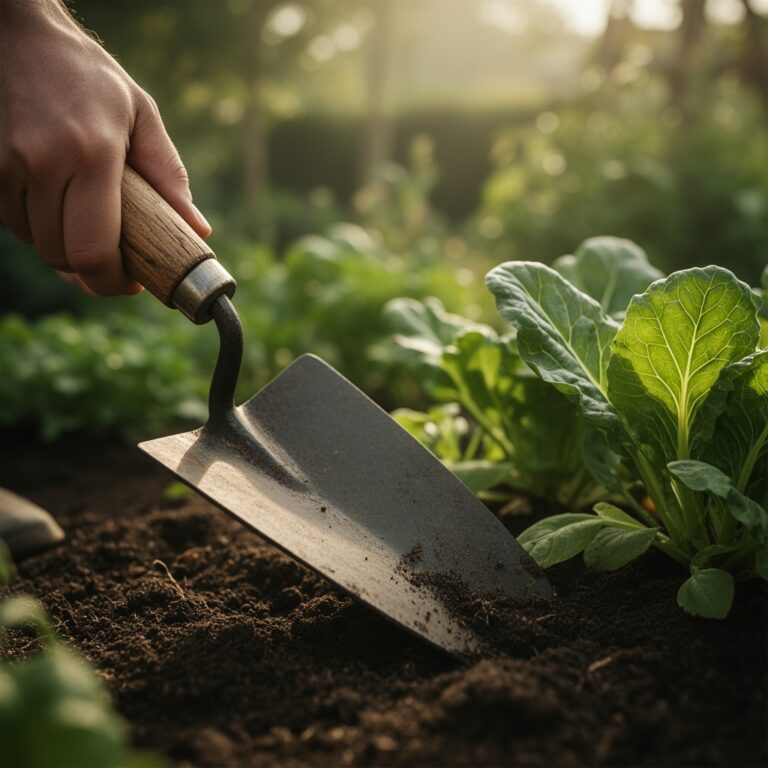
Use a hori-hori knife for precise weeding without disturbing the root systems of your primary specimens. Pruning must be performed with sharpened bypass pruners to ensure clean cuts that heal quickly. For hedges, shear twice annually: once in late spring after the first flush of growth and again in late summer before the plant begins its hardening-off process for winter. Always sanitize tools with 70 percent isopropyl alcohol between plants to prevent the spread of vascular wilts.
The Yield:
In a formal garden, the yield is often aesthetic, but for those incorporating "potager" elements or cut flowers, timing is critical. Harvest flowers when they are in the "tight bud" stage to maximize vase life. For woody herbs like lavender, harvest just as the first florets open on the spike.
Post-harvest handling requires immediate immersion in 40-degree Fahrenheit water to remove field heat and maintain turgor. Use a sharp blade to make a 45-degree angle cut on the stem, increasing the surface area for water uptake. This prevents premature senescence and keeps the plant material looking fresh for up to ten days.
FAQ:
What is the best soil for a formal garden?
A well-drained friable loam with a pH between 6.0 and 7.0 is ideal. It should have an organic matter content of at least 5 percent and a high Cation Exchange Capacity to retain essential nutrients like Nitrogen and Potassium.
How often should I prune my formal hedges?
Most formal hedges require shearing twice per year. Perform the first cut in late spring after the initial growth flush and the second in late summer. This timing allows the plant to heal before winter dormancy begins.
How do I maintain perfect symmetry in my garden?
Use physical markers like string lines, transit levels, and bamboo stakes during the planting and pruning phases. Consistent irrigation and fertilization are also required to ensure that all plants in a row grow at the same rate.
What causes yellowing leaves in boxwoods?
Yellowing, or chlorosis, is typically caused by Nitrogen deficiency or poor drainage leading to root rot. Check soil moisture levels with a meter and conduct a soil test to determine if an NPK adjustment is necessary.
Can I design a formal garden in a small space?
Yes. Formal design relies on scale and proportion rather than total acreage. Use dwarf cultivars and maintain strict vertical lines to create a sense of order and depth in limited square footage.