8 Best Professional Tool Racks for High-Tech Care
The smell of damp earth and the crisp snap of a leaf with high turgor pressure define a successful growing season. Maintaining this precision requires an organized workspace where every instrument is accessible and sanitized. Efficiency in the field begins in the shed; without the best tool racks for garden maintenance, a grower loses critical minutes during peak dawn harvesting or emergency frost mitigation. A disorganized toolset leads to cross-contamination of pathogens and dull blades that crush rather than slice vascular tissue. To maintain a high-tech garden, one must treat tool storage with the same scientific rigor applied to soil chemistry. Proper storage prevents the oxidation of high-carbon steel and ensures that every bypass pruner is ready to make a clean, non-jagged incision that heals without secondary infection.
Materials:
Superior plant health starts with a friable loam substrate characterized by a **sand-silt-clay ratio of 40-40-20**. This texture allows for maximum oxygen diffusion into the rhizosphere. For vegetative growth, focus on a **high-nitrogen NPK ratio such as 10-5-5** to drive chlorophyll production. As the plant transitions to the reproductive stage, shift to a **5-10-10 ratio** to support floral development and root fortification. The soil must maintain a **pH between 6.2 and 6.8** to ensure optimal nutrient bioavailability. At this range, the Cation Exchange Capacity (CEC) is maximized; this allows the soil to hold onto essential cations like calcium and magnesium rather than letting them leach through the profile during heavy irrigation.
Timing:
Successful cultivation is dictated by the hardiness zone and the local frost-free window. In Zones 5 through 7, the primary planting window opens when soil temperatures consistently reach 55 degrees Fahrenheit. The biological clock of the plant is governed by the photoperiod; short-day plants require a specific duration of darkness to trigger the transition from vegetative biomass accumulation to reproductive senescence. Monitoring the growing degree days (GDD) allows a horticulturist to predict harvest windows with mathematical certainty. Failure to respect these windows results in stunted development or premature bolting caused by thermal stress.
Phases:
Sowing
Seeds must be placed at a depth exactly two to three times their diameter to ensure sufficient energy reserves for emergence. Maintain a constant moisture level to trigger imbition without inducing anaerobic rot.
Pro-Tip: Utilize bottom heat to maintain a 70-degree Fahrenheit root zone temperature. This accelerates metabolic enzymes and ensures uniform germination across the tray.
Transplanting
Move seedlings when the first set of true leaves has fully expanded. This stage is critical for minimizing transplant shock, which occurs when the root hairs lose contact with the growing medium.
Pro-Tip: Inoculate the root ball with mycorrhizal fungi. This symbiotic relationship extends the root surface area by up to 100 times; it improves phosphorus uptake and drought resistance through enhanced hydraulic conductivity.
Establishing
During the establishment phase, focus on structural integrity. Ensure the central leader is straight and remove any competing suckers to direct energy toward the primary terminal bud.
Pro-Tip: Practice auxin suppression by pinching back the apical meristem. This disrupts apical dominance and forces the plant to distribute growth hormones to lateral buds; it results in a bushier, more productive architecture.
The Clinic:
Physiological disorders often mimic infectious diseases but result from environmental or nutritional imbalances.
Symptom: Interveinal chlorosis on young leaves.
Solution: This indicates an Iron (Fe) deficiency. Check the soil pH immediately; if the pH is above 7.0, iron becomes insoluble. Lower the pH using elemental sulfur or apply chelated iron foliar spray.
Symptom: Blossom end rot on fruit.
Solution: This is caused by a Calcium (Ca) deficiency or inconsistent moisture. Ensure the soil has a CEC high enough to retain calcium and maintain steady irrigation to facilitate calcium transport through the xylem.
Symptom: Purpling of the underside of leaves.
Solution: This is a classic sign of Phosphorus (P) deficiency. It often occurs in cold soils where microbial activity is low. Increase soil temperature or apply a water-soluble high-phosphate fertilizer.
Fix-It: Nitrogen Chlorosis
General yellowing of older, lower leaves indicates nitrogen is being scavenged for new growth. Apply a blood meal or urea-based fertilizer to restore nitrogen levels to the 20 to 50 ppm range in the soil solution.
Maintenance:
Precision maintenance requires specific data points. Provide exactly 1.5 inches of water per week delivered at the drip line to avoid wetting the foliage, which invites fungal spores. Use a soil moisture meter to verify that the root zone at a 6-inch depth remains at field capacity.
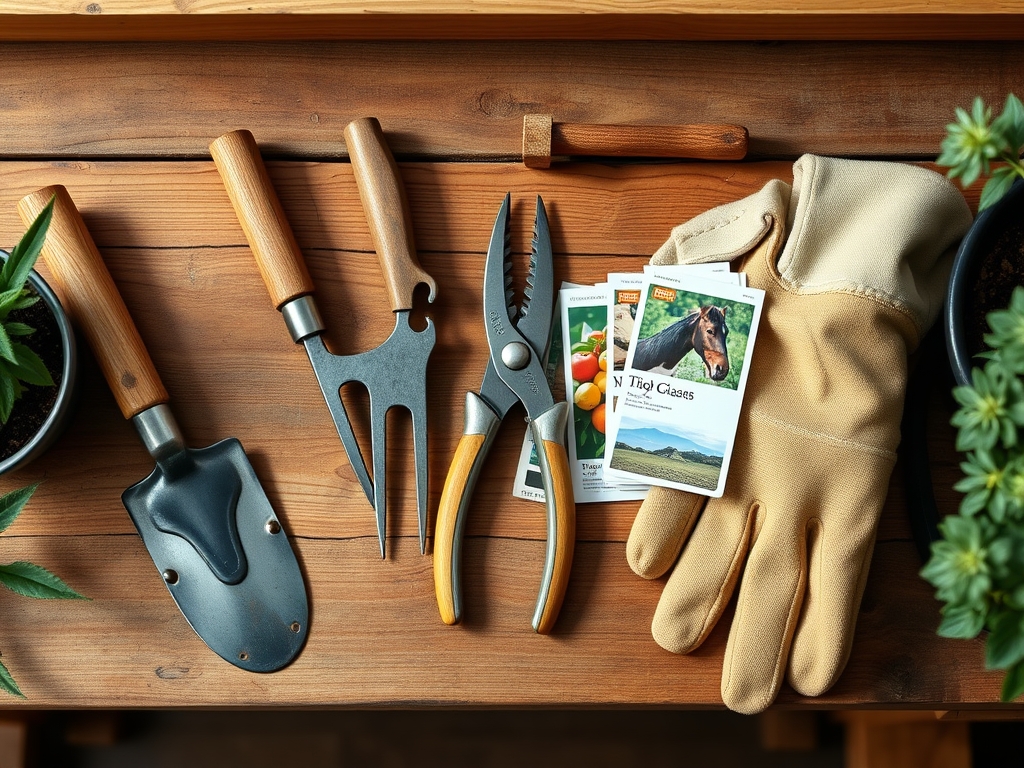
Every morning, inspect the garden with a hori-hori knife for soil compaction and a pair of bypass pruners for removing necrotic tissue. Use the knife to check the soil profile; if the blade cannot penetrate easily, the soil density is too high for gas exchange. Sanitize all tools in a 10 percent bleach solution or isopropyl alcohol between plants to prevent the mechanical transmission of viruses.
The Yield:
Harvesting must occur when the plant reaches peak chemical potency or physiological maturity. For leafy greens, harvest in the pre-dawn hours when turgor pressure is highest and the plant is cool. For fruiting bodies, look for the "abscission layer" to form at the stem; this indicates the plant has ceased nutrient transfer to the fruit.
Post-harvest handling is vital. Immediately submerge produce in 40-degree Fahrenheit water to remove field heat. This process slows down respiration and enzyme activity; it preserves the sugars and structural carbohydrates for day-one freshness.
FAQ:
What is the best way to organize long-handled tools?
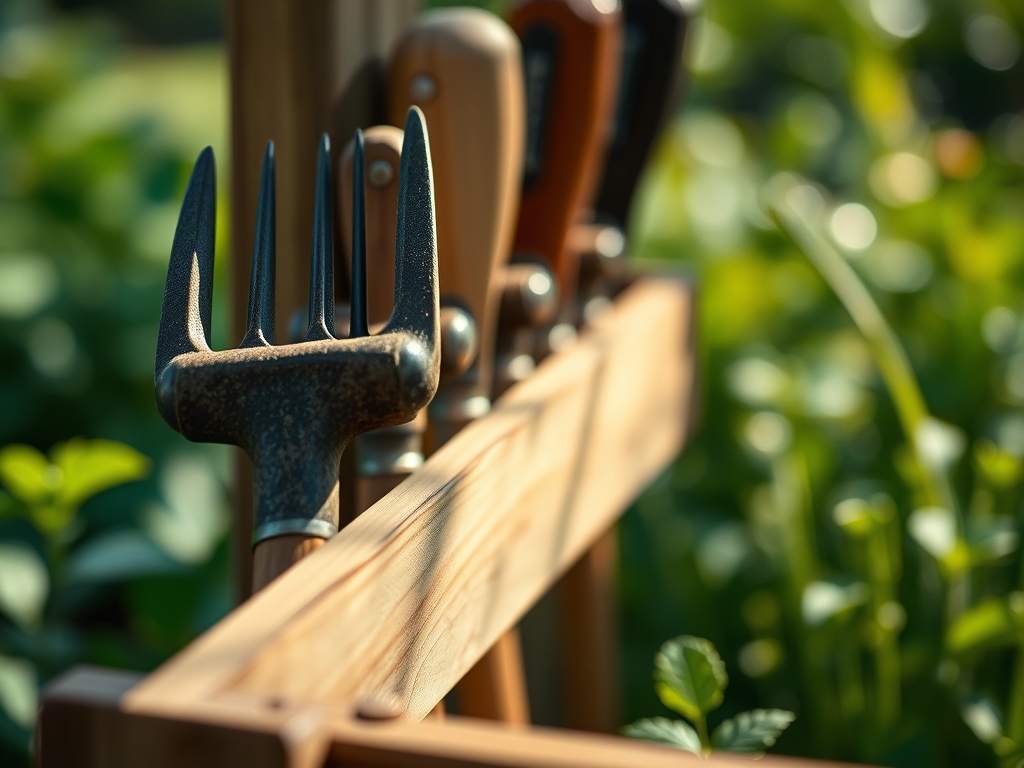
Use a vertical wall-mounted rack with rubberized grips. This prevents the metal heads from touching concrete floors; it stops moisture wicking and oxidation. Ensure the rack is rated for at least 50 pounds to handle heavy steel shovels.
How do I prevent rust on my garden tools?
Clean all debris after use and wipe the metal surfaces with a thin layer of mineral oil. Store them in a low-humidity environment. A tool rack with individual slots prevents blades from knocking together and creating micro-fractures in the steel.
Why is tool sterilization important for plant health?
Pathogens like Fusarium and tobacco mosaic virus can survive on metal surfaces. If you prune a diseased plant and then a healthy one, you act as a vector. Always dip tools in 70 percent isopropyl alcohol between every cut.
What is the benefit of a mobile tool cart?
A mobile cart allows you to keep your soil moisture meter, pH probes, and pruning shears within reach. This reduces physical fatigue and ensures that maintenance tasks are performed the moment a physiological need is identified in the field.